Exfat Reader For Mac
What is SD?
After our Windows encryption showdown, reader Jerod passed along this tip to make sure your encrypted volumes, especially external hard drives, in Windows play nicely with other platforms like OS.
SD describes devices that conform to SD standards for non-volatile memory cards. See the SD Association website for details.
Are there size limitations for the cards that can be inserted into the SD slot?
Yes. The SD card specification for a memory card is 32mm by 24mm by 2.1mm. You can also use thinner cards, such as MultiMediaCards (MMC). Avoid using cards that have a thickness greater than 2.1mm, as they might damage the SD card slot if you try to insert them.
Which SD card formats work in the SD card slot?
Cards that conform to the SD 1.x, 2.x, and 3.x standards should work. The SD card slot can use:
- Standard SD, 4MB to 2GB
- SDHC (Secure Digital High Capacity), 4GB to 32GB
- SDXC, 4GB to 2TB
- MMC (MultiMediaCards)
- UHS‑II, up to 2TB (iMac Pro only)
You can use a passive adapter like the one shown here to make MiniSD, MicroSD, and higher density formats like MiniSDHC and MicroSDHC conform to the width and thickness specifications listed above:
How fast can my Mac read or write to an SD card in the SD card slot?
Mac notebooks use the USB bus to communicate with the SD card slot. They have a maximum speed of up to 480Mbit/s. Mac desktops use the PCIe bus to communicate with the SD card slot. Desktops can transfer data at a faster rate.
Check the packaging that came with your SD media to determine the maximum transfer rate that your specific card uses.
To determine the maximum transfer speed of your Mac, you can use System Information. Choose Apple () menu > About This Mac and then click System Report.
If you use a Mac notebook:
- Select Hardware, then select USB.
- Select Internal Memory Card Reader and look for the Speed entry.
If you use a Mac desktop computer:
- Select Hardware, then select Card Reader.
- Look for the Link Speed entry. Computers that use the PCIe bus express their speed as GT/s.
Does the SD slot work with cards that exceed 32GB?
Yes. However, most media manufacturers preformat the media using common block-and-cluster sizes that don’t approach the theoretical limits of a given file system.
Most SD cards use the FAT32 file format, and preformatted FAT32 SD media is commonly available up to a capacity of 32GB. Media that exceeds 32GB usually uses the exFAT file system, while some smaller capacity cards use the FAT16 file format. Preformatted FAT16 media is generally available up to a capacity of 2GB.
If you use OS X Snow Leopard 10.6.5 or later, you can find out which file system you’re using:
- Insert the media into the SD card slot.
- Choose Apple menu > About This Mac.
- Click System Report.
- In the Hardware section, click Card Reader, and find the File System field.
Will the SD card slot work with SD cards that use the exFAT file system?
Yes. Any Mac that has an SD card slot and is running OS X 10.6.5 or later can use the exFAT file system.
exFAT is also supported in Boot Camp with Windows 7, 8.1, or 10 on any Mac made in 2011 or later with an SD card slot.
How do I insert media into the SD card slot?
When you insert the card, make sure that the metal contacts face down and point toward the computer. Don’t force media into the SD card slot, as this might cause damage.
Ntfs Reader For Mac Mavericks
How does my Mac use the media inserted into the SD card slot?
Your computer recognizes a card inserted into the SD card slot as a USB storage device. You can mount, read from, and write to the SD card just like you can with any other USB storage device.
I put the card in the slot, but it didn’t mount. What should I do?
Can Mac Read Exfat
Remove the card and insert it again. Sometimes the SD card won’t mount properly if you put it into the slot too slowly.
When I try to write content to the card, I get a 'cannot be modified' message. How can I fix this?
You see this message when you try to edit data on an SD card that’s locked. You need to use the lock slider to unlock the card before you can edit the data.
To eject the card, drag the icon that represents the card to the Trash. After the icon disappears from the desktop, you can remove the card from the computer. Adjust the lock slider tab to unlock the card, then reinsert the card into the slot. See the manufacturer’s instructions for the location of the slider tab.
Can I use Disk Utility to reformat an SD card?
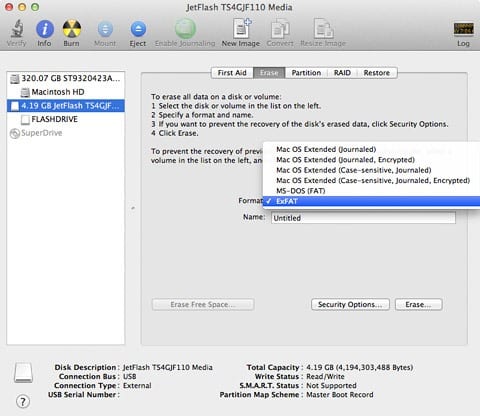
You can use Disk Utility to partition and format an SD device as FAT32 (using the MS-DOS FAT setting) or Mac OS Extended. The Mac OS Extended format can be used only on Macintosh systems. Non-Apple systems won’t recognize cards formatted to Mac OS Extended.
You might have to format a card that’s larger than 32GB with exFAT if you want to use it with a digital camera, GPS, or another device. When in doubt, format the card in the device that you intend to use it with.
Can I install macOS on an SD storage device and use it as a startup volume?
Use Disk Utility to change the default partition table to GUID. Then format the card to use the Mac OS Extended file format.
How do I remove a card from the SD card slot?
Before you remove the card, allow any data transfer to SD media to complete. To eject the card, drag the icon that represents the card to the Trash. After the icon disappears from your desktop, you can remove the card from the slot.
Don't remove a card while your Mac is sleeping, as this could lead to data loss. Always wake your computer and eject the SD card before removing it from your Mac.
Can I use Secure Digital Input Output (SDIO) cards?
Can I use macOS to see the specifications for the interface hardware and media inserted in the SD card slot?
You can get information about the interface hardware and the media that you inserted in the slot from the System Information:
- Choose Apple menu > About This Mac.
- Click System Report.
- In the Hardware section of System Information, select USB.
- In the list of USB devices, select Internal Memory Card Reader to access information about the interface hardware and the media inserted into the SD card slot.
Can I use the SD card slot while running Windows using Boot Camp?
The SD card slot works with Boot Camp in all supported versions of Windows. You’ll need to download and install the Windows Support Software to use the SD card slot with Windows.
Learn more about using Windows on a Mac.
Can I use an SDXC card on my Mac with Windows?
You can use an SDXC card in Windows 7, Windows 8, and Windows 10 with these Mac computers:
- MacBook Pro (Early 2011 and later)
MacBook Pro models from 2016 and later don't have a built-in SD card slot. You can use a USB-C card reader, or a combination of a USB-C to USB Adapter and a USB card reader. - MacBook Air (Mid 2011 and later)
- Mac mini (Mid 2011 and later)
Mac mini (Mid 2010) doesn't support SDXC cards. - iMac (Mid 2011 and later)
iMac (Mid 2010) doesn't support SDXC cards.
Can I use an SD, SDHC, or SDXC card to install Windows on my Mac?
No. You can’t use SD, SDHC, or SDXC cards with Boot Camp to install Windows software on Mac computers.
Apple’s macOS can read from Windows-formatted NTFS drives, but can’t write to them out of the box. Here are a few solutions for getting full read/write access to NTFS drives.
This could be useful if you want to write to a Boot Camp partition on your Mac, as Windows system partitions must use the NTFS file system. However, for external drives, you should probably use exFAT instead. macOS can natively read and write to exFAT drives, just like Windows can.
Three Options
RELATED:What’s the Difference Between FAT32, exFAT, and NTFS?
There are several options for this, and you’ll need to choose one:
- Paid Third-Party Drivers: There are third-party NTFS drivers for Mac that you can install, and they’ll work quite well. These are paid solutions, but they’re easy to install and should offer better performance than the free solutions below.
- Free Third-Party Drivers: There’s a free and open-source NTFS driver you can install on a Mac to enable write support. Unfortunately, this take a bit of extra work to install, especially on Macs with the new System Integrity Protection feature, added in 10.11 El Capitan. It’s slower than paid solutions and automatically mounting NTFS partitions in read-write mode is a security risk.
- Apple’s Experimental NTFS-Write Support: The macOS operating system includes experimental support for writing to NTFS drives. However, it’s off by default and requires some messing around in the terminal to enable it. It isn’t guaranteed to work properly and could potentially cause problems with your NTFS file system. In fact, we’ve had it corrupt data before. We really don’t recommend using this. It’s disabled by default for a reason.
We highly recommend paying for a third-party NTFS driver if you need to do this as the other solutions don’t work as well and are more work to set up.
The Best Paid Third-Party Driver: Paragon NTFS for Mac
Paragon NTFS for Mac costs $19.95 and offers a ten-day free trial. It’ll install cleanly and easily on modern versions of macOS, including macOS 10.12 Sierra and Mac OS X 10.11 El Capitan. It really does “just work”, so it’s the best option if you’re willing to pay a small amount of money for this feature.
You also won’t have to fiddle with terminal commands to manually mount partitions, insecurely mount partitions automatically, or deal with potential corruption as you will with the free drivers below. If you need this feature, paying for software that does it properly is worth it. We cannot stress this enough.
If you own a Seagate drive, be aware that Seagate offers a free download of Paragon NTFS for Mac so you won’t have to purchase anything extra.
You could also purchase Tuxera NTFS for Mac, which costs $31 and offers a fourteen-day free trial. But Paragon NTFS does the same thing and is cheaper.
The Best Free Third-Party Drivers: FUSE for macOS
This method is free, but it requires a good bit of work, and is less secure. To make your Mac automatically mount NTFS partitions in read-write mode, you’ll have to temporarily disable System Integrity Protection and replace one of Apple’s built-in tools with a binary that is more vulnerable to attack. So this method is a security risk.
However, you can use FUSE to mount NTFS partitions in read-write mode manually if you don’t mind using the Terminal. This is more secure, but it’s more work.
First, download FUSE for macOS and install it. Use the default options when installing it.
RELATED:How to Install Packages with Homebrew for OS X
You’ll also need Apple’s command line developer tools installed to continue. If you haven’t installed them yet, you can open a Terminal window from Finder > Applications > Utilities and run the following command to do so:
Click “Install” when you’re prompted to install the tools.
RELATED:How to Install Packages with Homebrew for OS X
In addtion, you’ll need to download and install homebrew if you haven’t already installed it on your Mac. Homebrew is a “package manager” for Mac OS X. Copy-paste the following command into a Terminal window and press Enter to install it:
Press Enter and provide your password when prompted. The script will automatically download and install Homebrew.
Once you’ve installed the developer tools and Homebrew, run the following command in a Terminal window to install ntfs-3g:
You can now manually mount NTFS partitions in read/write mode. From a terminal window, run the following command to create a mount point at /Volumes/NTFS. You only need to do this once.
When you connect an NTFS drive to the computer, run the following command to list any disk partitions:
You can then identify the device name of the NTFS partition. Just look for the partition with the Windows_NTFS file system. In the screenshot below, it’s /dev/disk3s1 .
The NTFS partition was probably automatically mounted by your Mac, so you’ll need to unmount it first. Run the following command, replacing /dev/disk2s1 with the device name of your NTFS partition.
To mount the drive, run the following command, replacing /dev/disk2s1 with the device name of your NTFS partition.
You’ll see the file system mounted at /Volumes/NTFS. It will also appear on your desktop as a normal mounted drive. You can eject it normally when you want to unplug it.
If you’re happy manually mounting partitions with the above instructions, you don’t have to continue.
RELATED:How to Disable System Integrity Protection on a Mac (and Why You Shouldn’t)
If you want to make your Mac automatically mount NTFS drives you connect in read-write mode, you’ll need to disable System Integrity Protection.
Warning: You probably don’t want to do this! The software’s official instructions warn that this is a security risk. You will be replacing the NTFS mount tools in your Mac with the ntfs-3g tools, which will run as the root user. Because of the way Homebrew installs software, malware running on your Mac could overwrite these tools. It’s probably not work the risk, but we’ll explain how to do if if you want to take the risk.
Reboot your Mac and hold Command+R while it’s booting. It’ll boot into a special recovery mode environment.
Launch a terminal from the Utilities menu in recovery mode and run the following command:
Once you have, reboot your Mac normally.
From the Mac desktop, open a Terminal window again and run the following commands to make ntfs-3g function:
Lastly, re-enable System Integrity Protection. Reboot your Mac and hold Command+R while it’s booting to enter recovery mode. Launch a terminal in recovery mode and run the following command:
Once you have, reboot your Mac. NTFS-write support should be functioning now.
To undo your changes and uninstall everything, you’ll need to first disable System Integrity Protection. After you do, run the following commands:
You can then uninstall FUSE for macOS from its panel in the System Preferences window and re-enable System Integrity Protection.
You can see why we recommend the $20 option instead now, huh?
Apple’s Experimental NTFS-Writing Support: Don’t Do This, Seriously
We don’t recommend the below method because it’s the least tested. This might not work properly, so don’t blame us or Apple if you experience problems. It’s still unstable as of macOS 10.12 Sierra, and it may never be fully stable. This is really just here for educational purposes.
First, be sure that your drive has a convenient single-word label. If it doesn’t, change its label. This will make this process easier.
You’ll first need to launch a terminal. Navigate to Finder > Applications > Utilities > Terminal or press Command+Space, type Terminal, and press Enter.
Type the following command into the terminal to open the /etc/fstab file for editing in the nano text editor:
Add the following line to nano, replacing “NAME” with the label of your NTFS drive:
Press Ctrl+O to save the file after you’re done, and then press Ctrl+X to close nano.
(If you have multiple NTFS drives you want to write to, add a different line for each.)
Connect the drive to the computer—unplug it and reconnect it if it’s already connected—and you’ll see it under the “/Volumes” directory. In a Finder window, you can click Go > Go to Folder and type “/Volumes” into the box to access it. It won’t pop up automatically and appear on your desktop like drives normally do.
To undo this change later, just repeat the above process to open the /etc/fstab file in nano. Delete the line you added to the file and save your changes.
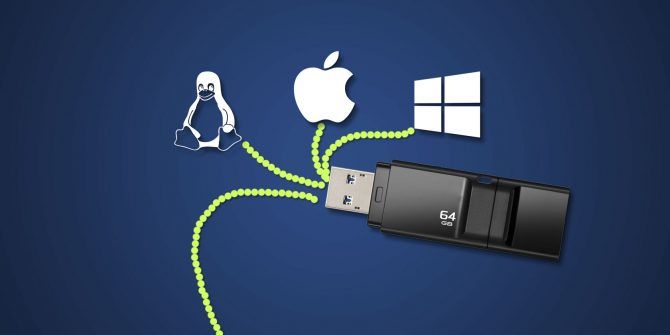
Most Mac users will be better off formatting external drives with exFAT, ensuring they work well on both Windows and Mac OS X without any extra work. if you must write to an NTFS drive, one of the paid, third-party drivers will be the easiest option with the best performance and least risk of file corruption.
READ NEXT- › What Can I Do with My Old iPhone?
- › How to Stream UFC 242 Khabib vs. Poirier Live Online
- › Free Download: Microsoft’s PowerToys for Windows 10
- › How to Overclock Your Computer’s RAM
- › What’s New in Chrome 77, Arriving September 10